Title: Fiber Laser Cutting Machine with Automatic Loading: Efficiency, Precision, and the New Standard in Sheet Metal Processing
Content:
The sheet metal fabrication industry is undergoing a quiet but decisive transformation. As labor costs rise and customer expectations for turnaround time tighten, the bottleneck is no longer the laser source itself—it is the material handling around it. A Fiber laser cutting machine with automatic loading addresses precisely this gap, turning a high-speed cutting tool into a continuous, low-intervention production system. This article examines the technical logic behind automated loading, the performance data that matters, and how established manufacturers such as ROCLAS are positioning their equipment in this evolving landscape.

The Case for Automation in Laser Cutting
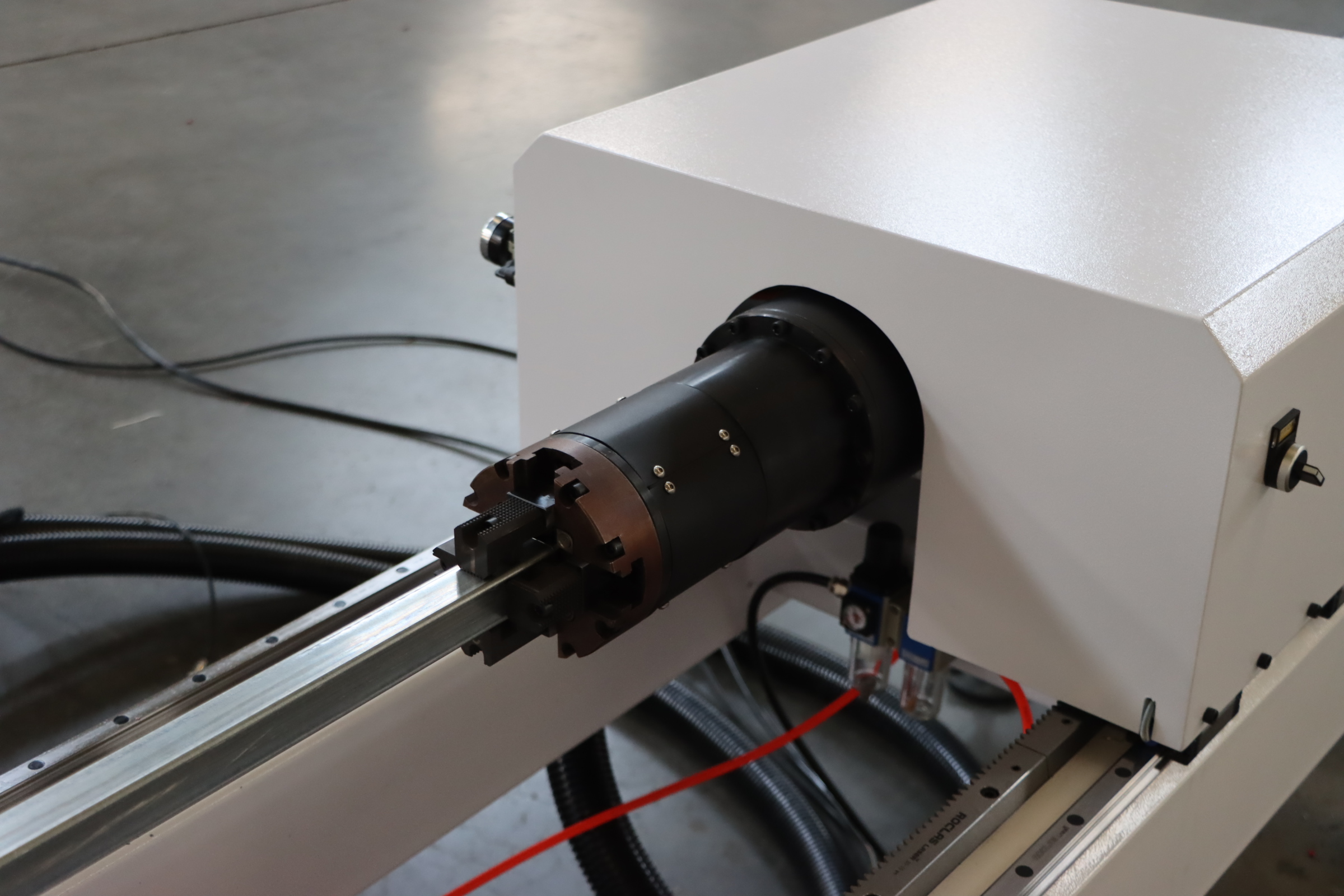
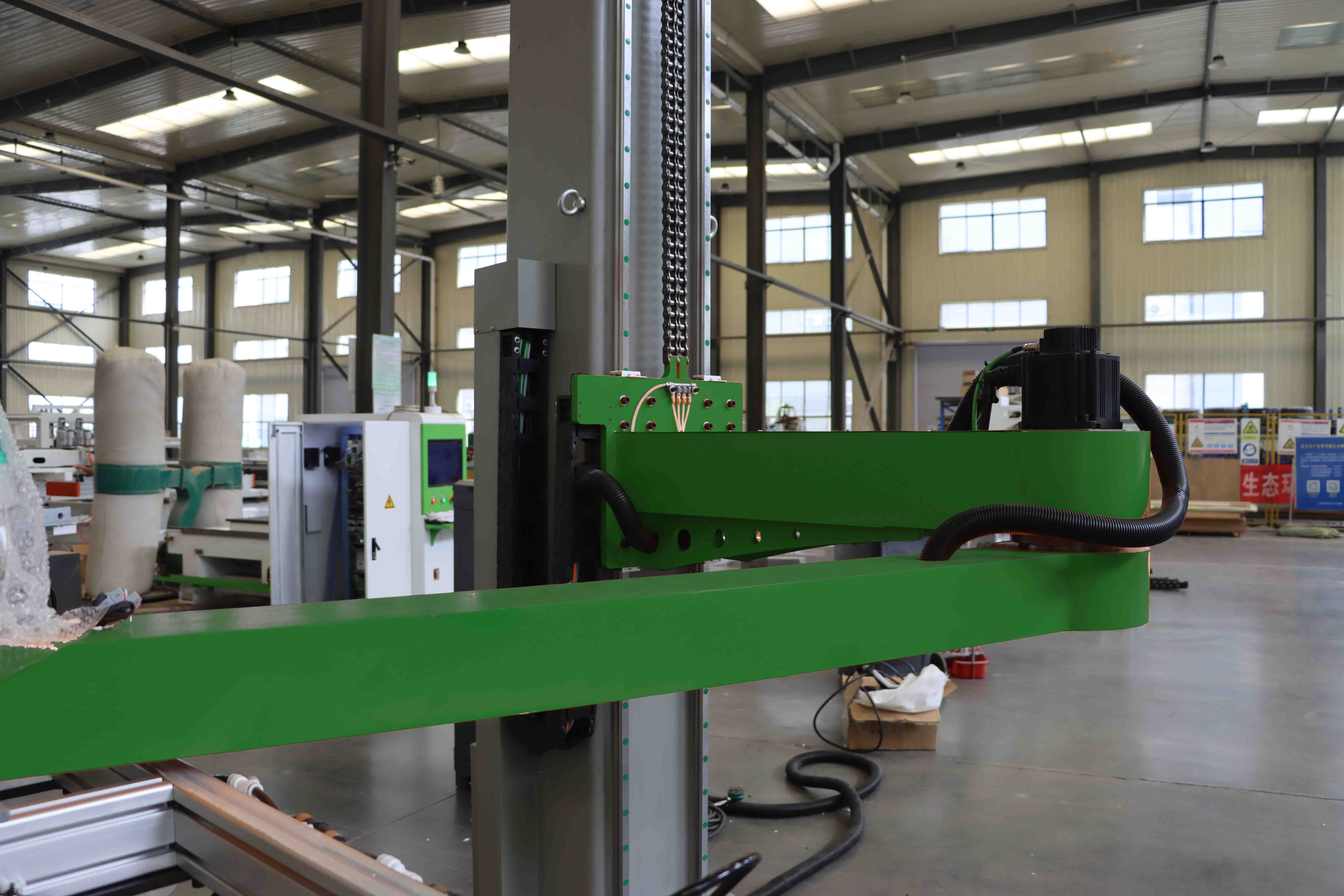
For years, the fiber laser cutting machine has been celebrated for its cutting speed, precision, and energy efficiency. Yet on many shop floors, the actual throughput is limited by manual loading and unloading. Operators must position each sheet, align it, run the cutting program, remove the finished parts and skeleton, then repeat. The laser may cut at 100 m/min, but the human cycle time between sheets often dominates the total processing time. Automatic loading systems—typically gantry or cantilever-style units with vacuum suction cups—eliminate this idle time. They pull sheets from a stack, align them to a reference edge, and feed them onto the cutting bed without operator intervention. The result is not merely labor savings; it is a fundamental change in machine utilization.
Key Technical Parameters and What They Mean
When evaluating a fiber laser cutting machine with automatic loading, several specifications determine real-world performance. The table below summarizes representative parameters from ROCLAS fiber laser cutting systems, which are typical of industrial-grade equipment in this category.
| Parameter | Specification |
|-----------|---------------|
| Working Area | 3000×1500mm / 4000×2000mm / 1500×4000mm |
| Laser Power | 1000W – 20KW |
| Laser Source | Raycus / MAX |
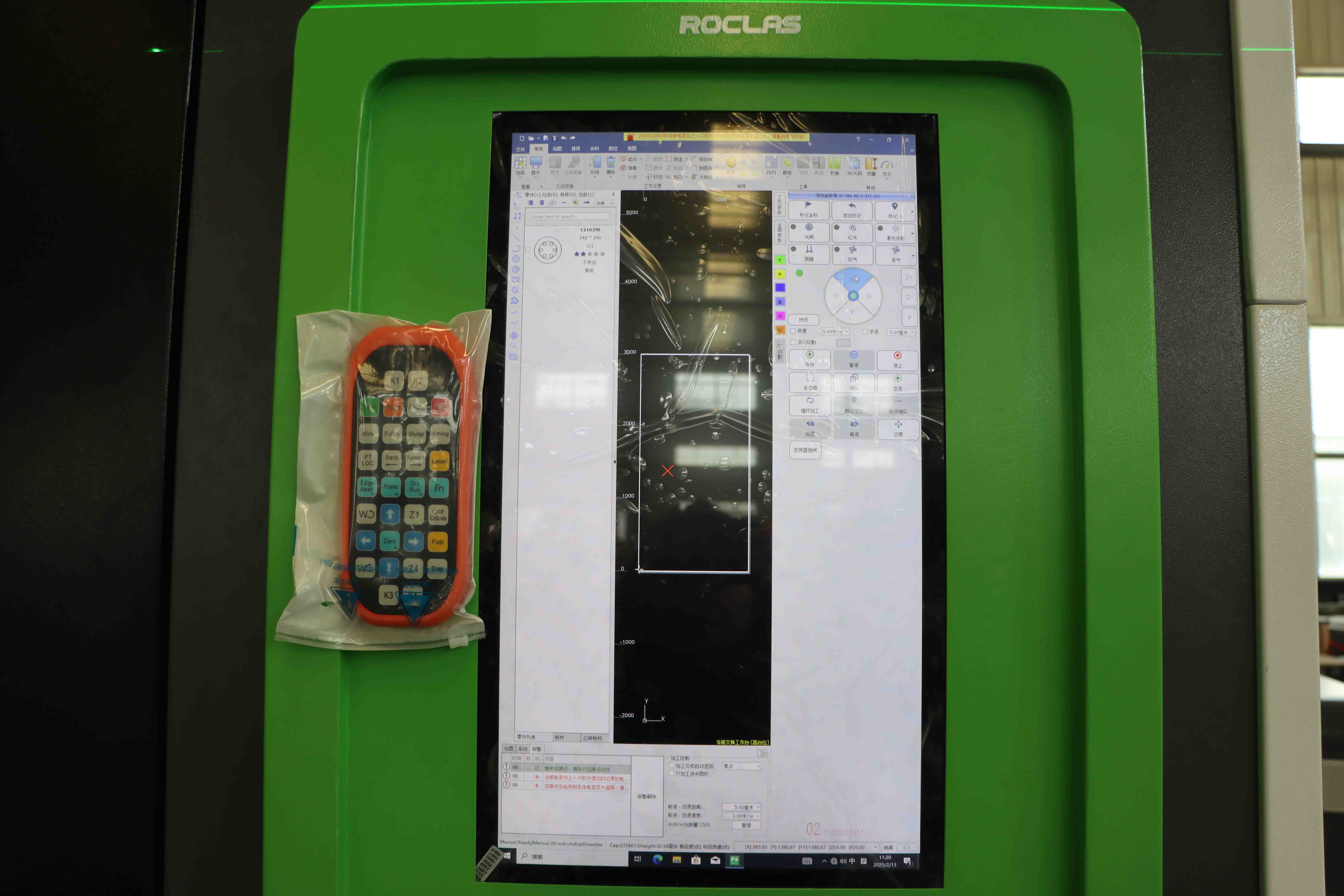
| Control System | Cypcut 3000S |
| X/Y Axis Position Accuracy | ±0.03mm |
| X/Y Axis Reposition Accuracy | ±0.02mm |
| Travel Speed | 100m/min |
| Max Acceleration | 1.0G |
| Max Tube Diameter (tube models) | 220mm |
| Power Requirements | 380V/50Hz |
The positioning accuracy of ±0.03mm and repositioning accuracy of ±0.02mm are critical when automatic loading is involved. A loading system that places a sheet with even minor misalignment will produce scrap if the machine cannot compensate through software or mechanical referencing. ROCLAS machines use the Cypcut 3000S control system, which supports automatic nesting and edge detection—features that pair naturally with automated material handling. The 1.0G maximum acceleration and 100 m/min travel speed mean the cutting head moves faster than most loading systems can feed, so the loading unit must be sized to match the laser's capability rather than the other way around.
From Single Machine to Production Cell
The integration of automatic loading transforms a standalone cutting machine into a production cell. In practice, this means the laser can run unattended for extended periods—often through a full shift or overnight. For job shops processing repetitive parts from standard 3000×1500mm or 4000×2000mm sheets, the productivity gain is substantial. The operator's role shifts from manual handling to monitoring and programming, which reduces fatigue and improves safety.
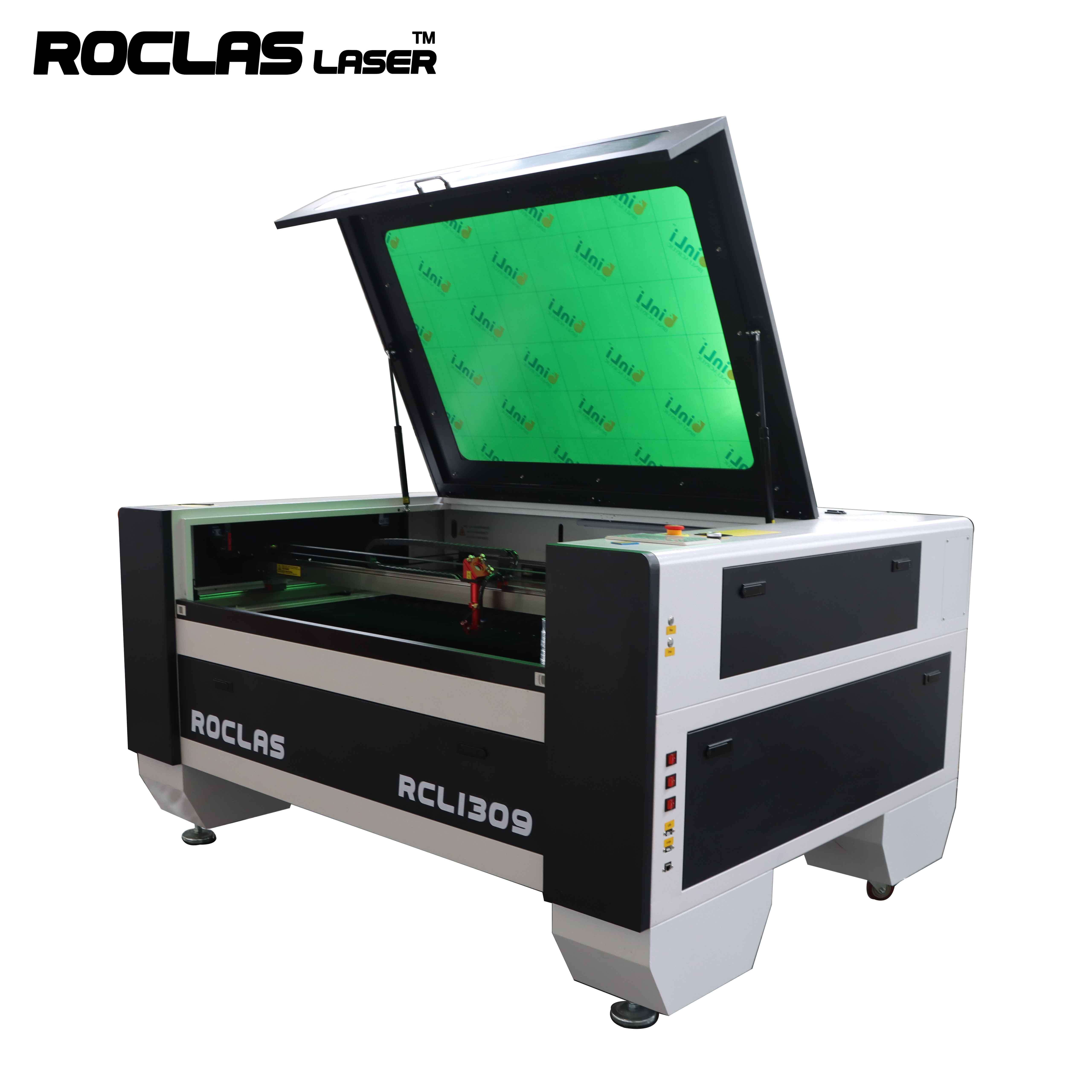
ROCLAS addresses this with a modular approach. Their fiber laser cutting machines are built on an industrial-grade heavy-duty steel structure, processed on CNC five-face machining centers to ensure rigidity and alignment. This structural precision is not incidental: an automatic loading system exerts repeated mechanical forces on the machine frame, and any flex or misalignment will degrade cut quality over time. The company's use of imported servo drives and reducers, along with components from Schneider, SMC, and igus, reflects a design philosophy oriented toward continuous-duty operation rather than intermittent use.
Material Handling and the Broader Ecosystem
Automatic loading does not exist in isolation. It works best when paired with automated unloading, sorting, and waste removal. ROCLAS offers an integrated waste conveying system that removes skeletons and offcuts from beneath the cutting bed, reducing manual cleanup. For operations that also process tubes, the sheet-and-tube integrated machine provides dual functionality, allowing one system to handle both flat sheets and round, square, or rectangular tubes up to 220mm in diameter. This versatility is particularly relevant for furniture manufacturers, automotive suppliers, and metal structure fabricators who deal with mixed material streams.
The materials processed by these machines span carbon steel, stainless steel, aluminum, copper, brass, galvanized steel, and titanium. For highly reflective materials such as copper and aluminum, ROCLAS equips its machines with a high-reflectivity suppression module, enabling stable processing of 1–2mm copper and 2–3mm aluminum plates. This matters because automatic loading systems are often used in high-volume production where material consistency is assumed; the machine must handle whatever the loader presents without manual intervention or risk of damage to the optics.
Economic and Operational Considerations
The decision to invest in a fiber laser cutting machine with automatic loading is ultimately an economic one. The upfront cost is higher than a manual-load equivalent, but the calculus changes when factored over a three-to-five-year horizon. Labor costs decrease, machine utilization increases, and scrap rates fall due to consistent sheet positioning. Energy consumption also improves: ROCLAS machines are designed for low power consumption and quiet operation, and the ability to run unattended during off-peak hours can take advantage of lower electricity tariffs in some regions.
Maintenance requirements are modest. Daily tasks include lens cleaning, nozzle inspection, and guide rail lubrication. The automatic loading system adds vacuum cup inspection and occasional filter replacement to the schedule, but these are routine items that do not require specialized expertise. ROCLAS provides technical support and after-sales service, and all products carry ISO 9001, CE, FDA, UL, and PDL certifications—a baseline that international buyers increasingly expect.
Conclusion
The fiber laser cutting machine with automatic loading represents a logical step in the maturation of sheet metal fabrication. It is not a novelty but a response to real production constraints: labor availability, consistency, and throughput. As laser power continues to climb—ROCLAS now offers systems up to 20KW—the cutting process itself becomes less of a limiting factor, and the surrounding material handling becomes more important. Manufacturers that integrate loading, cutting, and waste removal into a cohesive system will be better positioned to compete on cost, quality, and delivery time. The technology is proven; the question is no longer whether to automate, but how tightly to integrate.
Get a Quote
Regardless of whether you require general advice or specific support, we are happy to help you.
Recent Post
-
 Robotic Arm Laser Systems: Redefining Precision and Flexibility in Industrial ManufacturingAbstractThe integration of robotic arms with laser processing technologies represents a paradigm s...2026-07-06 16:30:57
 -
 The Ultimate Guide to High-Performance Fiber Laser Metal Cutting MachinesIntroductionFiber laser metal cutting machines have revolutionized the manufacturing industry with...2025-06-24 19:56:52
 -
 Understanding the Key Differences Between Fiber Laser and CO2 LaserIn the world of laser cutting and engraving, two types of lasers dominate the industry fiber laser...2025-03-30 09:31:59
 -
 The Ultimate Guide to Programmable Laser Cutters Revolutionizing Precision and EfficiencyIntroductionIn the realm of modern manufacturing and design, programmable laser cutters have emerg...2025-03-29 09:32:00
 -
 The Ultimate Guide to Steel Laser Cutting Techniques, Benefits, and ApplicationsIntroductionSteel laser cutting has revolutionized the manufacturing and fabrication industries, o...2025-03-24 08:31:07
 -
 Why Choose Roclas Fiber Laser Cutting for PED Components?IntroductionLaser cutting technology has revolutionized metal fabrication, offering unmatched prec...2025-06-16 07:49:19